Piracy spreading All-over

Transportation of pirated games and movies from one place to the next.

Piracy kills Passion

Professional are worst affected by the use of pirated softwares.

A Software Piracy Shop

This is what is happening on the sreets of India.

Key of Piracy

Imaginative description of how piracy have extended her arms in every phase of life.

Piracy leads Hell

Imaginative description of a person dying under the weight of piracy.

Thursday, 28 July 2011

IS PIRACY TOO EASY?

Join the Pirate Party!
Windows for Rs 60. Five movies for Rs 100. But you're probably 
inviting viruses and funding terrorists. 

Piracy in our World is an old story, one we’ve been all
but desensitized to since the first PCs started showing
up in offices and homes. It’s so open, so normal and
so habitual that it’s difficult to convince people that
there’s something wrong. And even in the last few
years, with awareness campaigns and better
distribution for legal software, the sheer audacity of
the industry is still amazing to see.

Yes, piracy is a flourishing industry. Maybe people
still think it happens only on the streets (or Torrent
sites) and are unaware of the amount of money that
gets siphoned out of regular channels and into back
markets. Maybe the authorities still think it’s only a
soft crime; an occasional distraction from “real” law
and order situation. Good, bad, wrong or right, consciously
or not, piracy has gained enough social sanction that
even registered DVD duplication units are known to
accept orders for producing these knockoff discs.

Surveys published by the Business Software Alliance
(BSA), IDG and KPMG point out that piracy is highest in
developing nations, and that there is a direct correlation
between piracy and malware infections. The monetary
value of unlicensed software, i.e. the loss incurred by
manufacturers, was pegged at US$ 50.2 billion for
the year 2008. Pirated software even outstrips free
software, since the cost advantage is negated. And
while India isn’t one of the top 25 offenders, losses are
mounting enough that manufacturers and distributors
are finding it tough to do business.

For the end consumer, on the other hand, it’s a
bonanza. A pirated version of Wndows Vista Ultimate
comes for Rs 60 today, as opposed to Rs 4,900 for a
legal copy of Home Basic. And Windows 7 is available
on the streets too, long before it will debut in shops.
Who wouldn’t give it a try? And who wouldn’t buy
five of the latest movies for Rs 100 on the roadside,
to watch at peace on their computers at night? Who
wouldn’t want to stop at a corner stall where a vendor
with a cheap laptop will fill their phones with all the
current  Bollywood soundtrack hits for Rs 150? They can
get a few fresh gigabytes’ worth every month.

Maybe without piracy, we wouldn’t watch as many
movies, read as many books or use as much high-end
software as they now do. Maybe we wouldn’t even
grow or learn without it-how many of us can say our
first computers used a licensed OS (or how many of us
even knew there was such a distinction)? Most likely,
we’d all be quite lost and upset if all access to pirated
material was suddenly blocked. We’re at the pirate
party already, and we don’t even think it’s a problem.

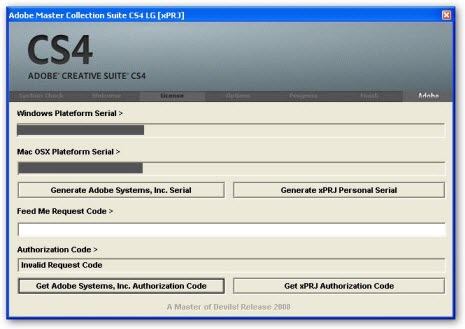
Software Cracking

Despite the efforts of software developers to reduce piracy by copy protecting discs and devising new strategies for restringing software. It dose not seem like crackers are given up. No matter how tough the protection is, they never fall.

SERIAL NUMBERS
most software vendors issue unique serial numbers to users for registering application offline after purchase. There are numerous websites that provide these serial numbers and search engine dedicated to them.

KEY GENERATORS
Serial numbers are based on secret algorithms. While some are completely random, the rest are the result of complex formulas that are unique to each PC and hard to crack. Software cracker are geniuses who study pattern in serial numbers and decipher the formula based on them.. They develop key generators, but these can inject a virus or a worm in our PC.

PATCHES
Certain application check the authenticity of the serial number by verifying it online after the user enter it. A couple of files in the software's program folder communicate with developer's server for verifying the serial. Some crack patch these files to disable communication. Some also inject code ito the executables that ruins the serial number checking mechanisms.

Pirated Games


Piracy in games isn't very different especially when it comes to pirated games DVDs being sold at a much lesser prices and large number of downloads form torrent sites. The main difference is that games, being a concentrated market, arent talked about as much as movie and music.

A genuine PC game DVD can cost anywhere from Rs 500 and Rs 2000 and similar prices apply to games for consoles such as sony Playstation 3. On torrent sites, PC games are downloadable for free and console games sell for as little as Rs 30 outside railway station and in busy market places.

The obvious reasons for buying pirated games are, affordability-more than anything else- and very easy accessibility. As commonly seen, these games are sold in thin polythene bags with counterfeit labels. The media is low quality and prone to scratches. A single scratch can render the DVD unusable because many PC games contain compressed data which needs to be decompressed before installation. If one file is corrupt, the game cannot be installed.

 The downsides don't end here. If you manage to install the game, there's no guarantee if it will run properly because many games contain bugs and even Trojans and viruses. Downloading and playing pirated PC games is not so easy anymore, there's work involved such as patching and cracking before you can start playing. If you're thinking about warranties, pirated games aren't playable on consoles bought officially-ones that aren't equipped with mod chips-which are a violation of the warranty terms.

If you manage to play pirated games on a modded console, there's no warranty and support, either for the game or the console, whereas official players have these benefits.

Ebook Piracy

Evidently, the issue of ebook piracy hasn’t surfaced and been addressed as much as other digital content. But it still remains a major issue for publishers. If you’ve heard of The Encyclopedia of Weapons of World War II, or Textiles in Automotive Engineering, chance are that you have stumbled upon an ebook site, where there are gazillions of other titles listed by category. Ironically when you search for a book to buy one online, chances are that the results will list pirate sites even before the official website.

Here are a  few reasons why people might resort to book piracy. Downloading ebooks for free is not only be convenient, but if you don’t like the ebook, you can delete it. Torrent sites offer an enormous number of niche titles which you may never find normality at a book shop. Websites have dedicated search engines for ebooks. Punch in the title, topic or genre and you’ll find it, so availability is another factor. Language plays a big role too. If you’re learning a language and want a specific book to read, you might not find it locally at all.


International magazines, books and study material can be hard to find, but not on torrent sites. Also niche topics like ‘Optical Radiometry’ pose no problem.

Usually sites provide links to third party hosts where the actual file is available. Here’s another way paid books are read online for free. www.scribd.com and www.esnips.com allow readers to read digital books in a web browser. But you do lose the pleasure of holding a book in your hand, reclining in your chair and reading at your convenience.

The long and short of it is that ebook piracy has been a mainstay for a long time now and doesn’t seem to be anywhere near fizzling out, unless sufficient market awareness is created.


Piracy attacks Music

The losses that the indian music industry incurs due to audio piracy amount to millions of rupees every year. The popularity of the MP3 format among masses has led to an exponential increase in piracy. Mediums for playing MP3 files are easily affordable. DVD players that support MP3 are available for as low as Rs 1,200. Even a sub-Rs 2,500 cellphone plays MP3 files. If you want a pocketable MP3 Player, you can pick a Chinese one from the roadside for less than Rs 1,500. You don't have to spend much to pack these devices with songs of you choice-an MP3 disc with over a hundred songs costs a mere Rs 30 ate roadside shacks.

Even though the songs might be encoded at a low bit rate or even ripped from an audio cassette, they are good entertainment for those who don't care for sound quality. What keeps piracy going strong is the choice of compilations you get right under your nose. Be it the hits of Kishore Kumar or all Bollywood movies of 2009, it wont be hard to find. Such compilations aren't available on original CDs, so pirated MP3 discs are hot favourites of the aam janta. That's just a picture of what sells on the road. Whats on the internet is even more interesting. It's possible to download just anything off the web. P2P and Bittorrent are no longer unheard of. Where else on the planet would you find entire discographies of Elvis Presley, the Beatles or Micheal Jackson for free? Bollywood music albums are available on the web even before CDs hit the stands.

One reason why people don't hesitate about buying or downloading pirated music is that unlike pirated software, there's a very low risk of getting infected by viruses and Trojans. Plus you can get high quality or lossless audio CD rips of albums too. Some Bittorrent websites also publish description of music albums so that you get a fair idea of genre of music and artist's background. Music companies have tried several methods of protection to prevent the disc from being ripped using audio CD rippers, but there has always been a way out. Plus there are lossless audio formats that guarantee CD quality output. Nothing comes close to original audio CDs when it comes to audiophile quality output, but there are music pirates who are audiophiles. You even get ISO images of audio CDs along with high quality cover art so that you can print them and use them as CD inlays.

In several countries, recording associations have sued music downloaders. The same doesn't appear to be happening here, and there is no fear of it starting anytime soon.

WHAT COULD BE DONE?

For the people who make their living creating and selling movies, songs, video games, and software programs, the effort to stop piracy is a constant battle. Protecting intellectual property rights requires using several different approaches while adjusting to a marketplace with a never ending appetite for new content. Even though the general public may think of piracy as a victimless crime, this form of copyright infringement damages the creative professional's ability to earn a living from his work.

Public education campaigns are typically considered the first line in the defense against piracy. To help stop piracy of DVD movies, for example, filmmakers started putting a short commercial at the beginning of each disc equating buying a pirated copy of a DVD to shoplifting. Individual artists, ranging from celebrity musical acts like Metallica to the stay-at-home mothers who sell digital scrapbooking kits in their free time, frequently speak out against piracy when talking to their fans. Grassroots organizations such as Stop Piracy Now also work to educate the public about intellectual property rights through online marketing campaigns.

Technology has been a key component in helping to stop piracy. Music companies have been experimenting with ways to put anti-copying software onto the CDs they sell. Software programs can be created to require authorization codes or online registration forms that serve to stop piracy because they are only given with legal copies. For downloadable content, digital rights management systems limit the number of devices that can play a particular movie or song in order to stop people from sharing unauthorized copies. On a similar note, some sites are selling downloadable files with a "digital fingerprint" that makes it possible to trace pirated copies back to the original source. Unfortunately, resourceful hackers and people in the piracy industry continue to find ways to get around these measures.

Lawsuits may seem like an obvious way to stop piracy, but legal action is typically a last resort. With the global nature of the Internet, it is time consuming and expensive to track down all the parties that would be involved in a lawsuit. Piracy laws also vary from country to country, making enforcement rather difficult. For large corporations, negative publicity is a factor as well. The Recording Industry Association of America (RIAA) came under fire in 2000 for suing thousands of individuals accused of illegally downloading copyrighted songs through Napster®, including college students, stay-at-home parents, and retirees.

Twitter Delicious Facebook Digg Stumbleupon Favorites More